

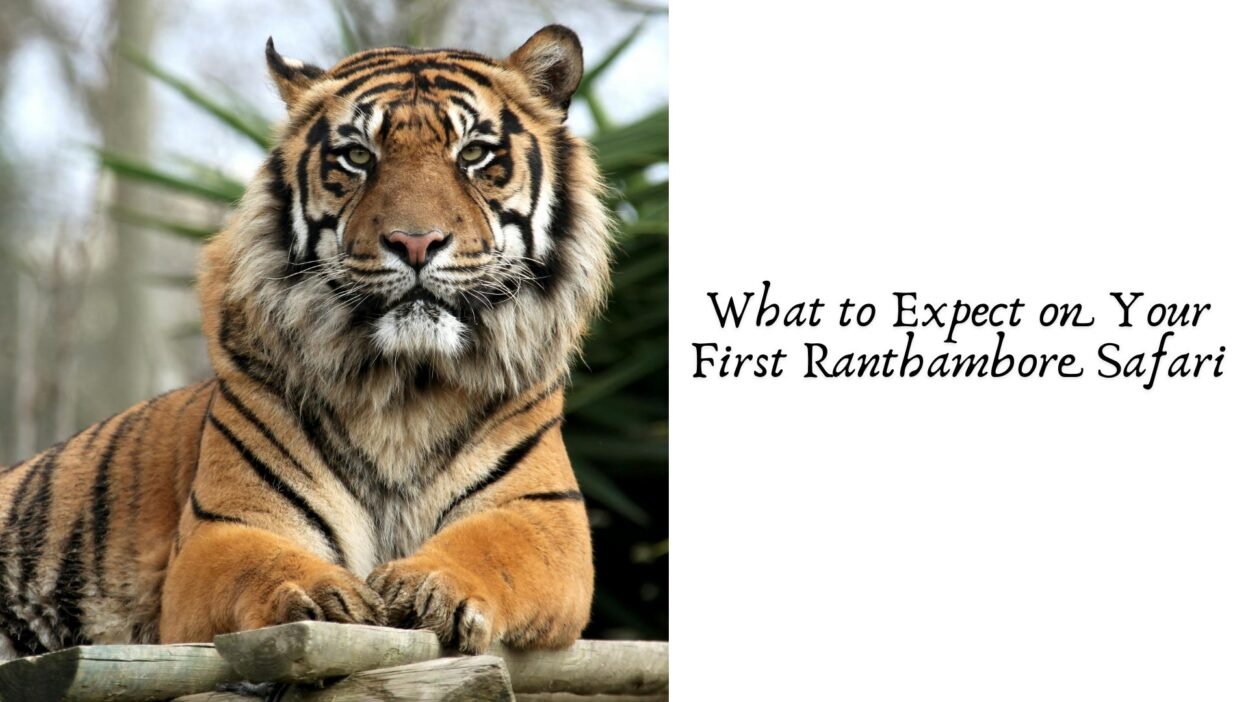
Ranthambore Safari | Eye Of The Tiger
A first safari is more than a wildlife excursion—it is an opportunity to experience nature in its rawest and most unpredictable form. Among India’s most celebrated wildlife destinations, Ranthambore Safari offers travelers the chance to explore a remarkable landscape of forests, lakes, rocky terrain, ancient ruins, and diverse wildlife. The park is particularly famous for its Royal Bengal tigers, making it a dream destination for wildlife enthusiasts, photographers, nature lovers, and first-time safari travelers.
If you are planning your first visit to Ranthambore National Park, knowing what to expect can make the experience more comfortable, enjoyable, and memorable. From safari timings and vehicles to wildlife sightings and photography opportunities, every part of the journey has its own charm.
Understanding Ranthambore Safari
Ranthambore National Park is located in Rajasthan and is one of India’s best-known tiger habitats. The park combines dry deciduous forests, open grasslands, rocky hills, water bodies, and historic structures to create a distinctive wildlife environment.
A Ranthambore Safari allows visitors to enter designated areas of the park accompanied by trained safari staff. During the drive, you may encounter tigers, leopards, sloth bears, sambar deer, spotted deer, wild boars, nilgai, crocodiles, birds, and many other species.
However, one of the most important things to understand before your first safari is that wildlife sightings can never be guaranteed. Tigers are wild animals, and their movements depend on weather, food availability, territory, water sources, and many other natural factors.
The uncertainty is actually part of what makes a safari exciting.
What Happens Before the Safari Begins?
Your safari experience generally begins before you enter the forest. Depending on your booking and safari arrangement, you will need to reach the designated boarding or entry point at the instructed time.
It is important to arrive early. Safari schedules are organized carefully, and delays can affect your experience. Keep your identification and booking details readily available if they are required for verification.
Once the necessary formalities are completed, you will be directed toward your assigned safari vehicle and group.
This is often the moment when the excitement really begins.
Jeep Safari or Canter Safari?
First-time visitors may encounter two common safari vehicle options: jeeps and canters.
Jeep Safari
A jeep is a smaller open safari vehicle that generally accommodates a limited number of visitors. It can provide a more intimate wildlife experience and may be particularly appealing to photographers and travelers who prefer smaller groups.
Canter Safari
A canter is a larger open vehicle designed to accommodate more passengers. It is a practical option for families, groups, and travelers who want to experience the park without choosing a smaller jeep.
The exact vehicle availability, zones, and booking conditions can vary, so travelers should check the current official rules and booking information before planning their trip.
The First Few Minutes Inside the Forest
The beginning of a safari can feel surprisingly quiet.
You may initially see nothing more dramatic than trees, grass, rocks, birds, or deer moving through the landscape. This is completely normal.
A safari is not like visiting a zoo where animals are visible in predictable locations. The forest is constantly changing, and wildlife can be hidden behind vegetation or moving through areas that visitors cannot access.
Your driver and guide will watch carefully for clues such as:
- Fresh animal tracks
- Alarm calls from deer or monkeys
- Movement in the vegetation
- Birds behaving unusually
- Pugmarks or other signs
- Sounds coming from deeper inside the forest
- Animals gathered around water sources
Learning to notice these small details can make your safari much more interesting.
The Excitement of Looking for a Tiger
For many travelers, the biggest attraction of Ranthambore is the possibility of seeing a tiger.
A tiger sighting can happen unexpectedly. You may be driving along a forest track when your guide suddenly slows down. Perhaps a group of deer begins making alarm calls. The vehicle stops, everyone becomes silent, and your attention shifts toward the trees.
Those few seconds of anticipation can be unforgettable.
If a tiger appears, resist the temptation to immediately focus only on your camera. Take a moment to observe the animal with your own eyes.
Watch how it walks, rests, looks around, or interacts with its surroundings. A tiger sighting is about much more than getting a photograph.
What Other Wildlife Can You See?
Although tigers receive much of the attention, Ranthambore’s wildlife extends far beyond them.
Depending on your safari route and luck, you may encounter:
Sambar Deer
The sambar is one of the largest deer species found in the region. These animals are frequently associated with forest areas and water sources.
Spotted Deer
Also known as chital, spotted deer are among the animals you may encounter during a safari. Their presence can also provide important clues about predator activity.
Nilgai
The nilgai is a large antelope commonly found in parts of northern and central India. Its size and distinctive appearance make it an interesting safari sighting.
Wild Boar
Wild boars are another fascinating species that may appear along forest tracks or around feeding areas.
Sloth Bear
Seeing a sloth bear can be a particularly memorable experience. These animals can be elusive, so sightings are not guaranteed.
Crocodiles
Ranthambore’s lakes and water bodies can provide opportunities to observe crocodiles, especially when conditions are favorable.
Birds
Birdwatchers can also enjoy the park’s diverse birdlife. Depending on the season, visitors may spot eagles, owls, kingfishers, peafowl, vultures, parakeets, herons, and many other species.
Why the Landscape Is Part of the Experience
One of the things that makes Ranthambore unique is that the safari is not solely about animals.
The landscape itself is spectacular.
You may pass through dry forests, open grasslands, rocky terrain, lakes, and areas surrounded by ancient ruins. The combination of wildlife and history creates an atmosphere that is distinctly different from many other wildlife destinations.
The sight of a wild animal moving through a landscape containing centuries-old architectural remains can be particularly impressive.
Expect Dust, Sun, and Changing Weather
First-time safari visitors sometimes underestimate the outdoor conditions.
Safari vehicles are generally open, which means you will be directly exposed to the environment. Depending on the season, you may experience:
- Strong sunlight
- Dust
- Cool early mornings
- Warm afternoons
- Wind
- Dry conditions
- Sudden changes in temperature
Comfortable clothing is therefore important.
Choose practical clothes that allow you to sit comfortably for several hours. Sunglasses, a hat or cap, sunscreen, and a light layer for cooler conditions can also be useful depending on the season.
What Should You Wear?
For a safari, comfort should generally take priority over fashion.
Neutral and natural-looking colors are often preferred because they blend better into the surroundings. Comfortable trousers, breathable shirts, sturdy footwear, and a light jacket when needed can make the experience easier.
Avoid excessively bright or uncomfortable clothing if you expect to spend several hours outdoors.
Most importantly, dress according to the season and current weather conditions.
What Should You Carry?
Packing light is usually the best approach.
Useful items may include:
- Safari booking documents or required identification
- Mobile phone
- Camera
- Extra batteries or power bank
- Sunglasses
- Hat or cap
- Sunscreen
- Water
- Light snacks if permitted
- Binoculars
- A light jacket during cooler periods
Always follow the park’s current rules regarding food, plastic, photography equipment, and other personal belongings.
Photography During Your First Safari
Ranthambore is an excellent destination for wildlife photography, but first-time visitors should remember that wildlife photography requires patience.
Do not expect every photograph to be perfect.
Animals may move quickly, remain partially hidden, or appear in difficult lighting conditions. A tiger may emerge for only a few seconds before disappearing into the forest.
If you are using a camera, keep it ready but avoid becoming so focused on photography that you miss the actual experience.
For mobile photography, use your device carefully and avoid excessive movement or noise while wildlife is nearby.
Why Patience Matters
Patience is one of the most valuable skills you can bring to a Ranthambore Safari.
You might spend considerable time driving without seeing a tiger and then suddenly experience an extraordinary sighting.
Wildlife follows its own schedule.
Instead of thinking only about finding a tiger, enjoy the entire journey. Watch the birds, observe deer behavior, admire the scenery, listen to the forest, and pay attention to your guide.
Sometimes the most memorable safari moments are the ones you did not expect.
Follow Your Guide’s Instructions
Your guide and driver play an important role in making your safari safe and enjoyable.
They understand the environment and are trained to operate within park regulations. If they ask passengers to remain quiet, stay seated, or avoid sudden movement, follow their instructions.
Never attempt to approach, feed, call, or attract an animal.
Wildlife should always be observed from a respectful distance.
What If You Don’t See a Tiger?
This is one of the most important expectations for first-time visitors.
You may complete your safari without seeing a tiger.
That does not mean the safari was unsuccessful.
Ranthambore is a natural habitat, not an attraction where animals appear on demand. Even if a tiger remains hidden, you can still enjoy the forest, birds, deer, crocodiles, landscapes, and countless small details that make the ecosystem special.
Many experienced wildlife travelers understand that the thrill comes from being in the wild—not simply from checking a tiger off a list.
The Role of Safari Zones
Ranthambore is divided into different tourism zones, and visitors are assigned or permitted to visit specific zones according to current booking and park management arrangements.
Different zones can offer different landscapes and wildlife experiences. A particular area may be known for frequent sightings at one time, while conditions may change over the course of the year.
Therefore, it is better not to assume that one zone will automatically guarantee a tiger sighting.
Responsible safari operators and experienced guides can help visitors understand the nature of the area they are exploring.
Respecting the Wildlife Environment
A responsible safari is about more than sightseeing.
Visitors should remember that they are entering an ecosystem that belongs to wild animals.
Good safari behavior includes:
- Maintaining silence around wildlife
- Never feeding animals
- Never throwing anything from the vehicle
- Staying inside the designated vehicle
- Following guide instructions
- Avoiding unnecessary noise
- Not attempting to attract animals
- Respecting other safari vehicles
- Avoiding litter
- Following all park regulations
Responsible tourism helps protect the environment for future visitors and, more importantly, for the wildlife itself.
Making Your First Ranthambore Safari More Enjoyable
A little preparation can significantly improve your experience.
Book in Advance
Ranthambore is a popular wildlife destination, especially during busy travel periods. Planning your safari ahead of time can help you secure your preferred travel arrangements.
Check Current Rules
Safari regulations, timings, zone arrangements, and booking procedures can change. Always verify current information before your visit.
Arrive Early
Being punctual reduces stress and ensures that you are ready when your safari departure time arrives.
Keep Your Expectations Realistic
A tiger sighting is exciting, but it should not be the only measure of a successful safari.
Listen to Your Guide
Guides can help you interpret animal behavior and notice signs that an inexperienced visitor might overlook.
Enjoy the Journey
Look beyond the tiger. The forest itself is the attraction.
Best Time for a Ranthambore Safari
The ideal time to visit depends on what you want from the experience.
The cooler months can be comfortable for outdoor activities and wildlife exploration. Warmer periods can sometimes provide interesting opportunities for observing animals around water sources, although the heat can be intense.
Seasonal conditions also influence vegetation, animal behavior, photography, and overall comfort.
Before booking, check current park opening periods and seasonal restrictions because safari availability can vary.
A Typical First Safari Experience
Your first safari may look something like this:
You arrive before your scheduled departure and complete the necessary formalities. After entering the safari vehicle, you begin driving through the designated route.
At first, the forest may seem quiet. Then your guide points toward a group of deer. A peacock crosses the track. Monkeys call from the trees.
You continue driving.
Suddenly, the guide notices something in the distance.
The vehicle slows.
Everyone becomes quiet.
You wait.
Maybe a tiger appears.
Maybe it doesn’t.
Either way, the experience of sitting inside an open vehicle surrounded by a wild landscape is something you are unlikely to forget.
Why Ranthambore Safari Is Worth Experiencing
A Ranthambore Safari offers something that cannot be recreated indoors or through ordinary sightseeing.
It combines adventure, wildlife, natural beauty, photography, and history in one experience. The possibility of encountering a Royal Bengal tiger in its natural environment creates an unmatched sense of anticipation.
But the true value of Ranthambore goes beyond tiger sightings.
It is about understanding how animals interact with their environment, appreciating biodiversity, and experiencing nature without controlling the outcome.
That unpredictability is what makes every safari different.
Final Thoughts
Your first Ranthambore Safari should be approached with curiosity, patience, and respect for nature. Prepare for changing weather, long periods of waiting, unpredictable wildlife movements, and moments of extraordinary excitement.
You may see a tiger crossing the road, a herd of deer near a water body, a crocodile resting by a lake, or a colorful bird appearing unexpectedly among the trees. Every sighting contributes to the story of your journey.
Most importantly, remember that a safari is not simply about finding an animal—it is about entering its world responsibly.
With proper planning, realistic expectations, and an appreciation for the natural environment, your first Ranthambore Safari can become one of the most memorable wildlife experiences of your life.
Ranthambore Safari | Eye Of The Tiger is an invitation to discover the wild, respect its inhabitants, and experience the unforgettable beauty of Rajasthan’s remarkable wilderness.