

A DUI stop can move quickly. One minute, you’re answering questions on the roadside. The next, a Morgantown criminal lawyer may explain that you could be asked to provide a breath, blood, or other chemical sample. This test can become an important piece of the prosecution’s evidence.
If you are facing this situation, it’s important to understand what the test measures and how it is administered. A Morgantown criminal lawyer will typically look beyond the number on the report and examine how that number was obtained.
How BAC Testing Works in West Virginia
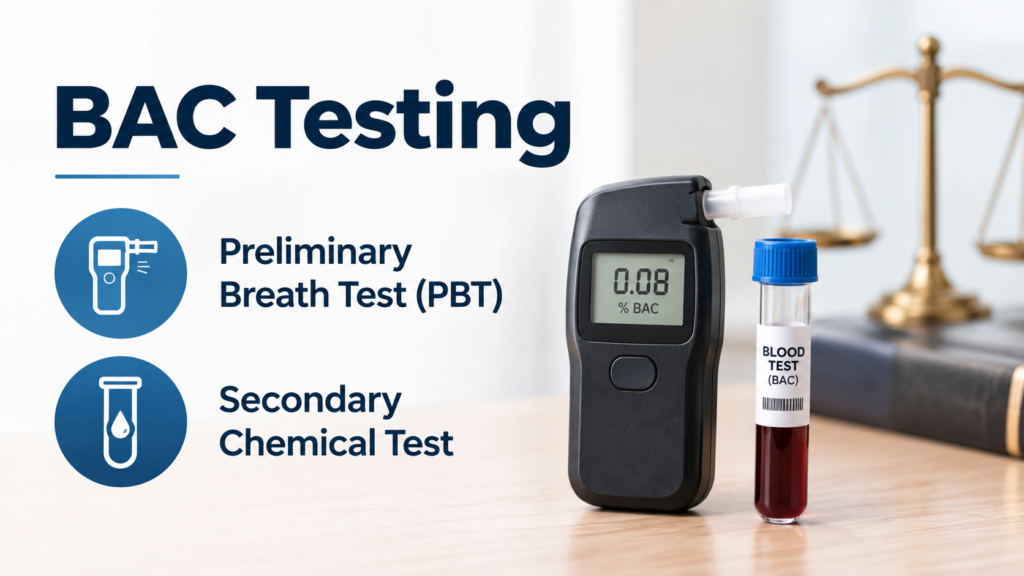
West Virginia generally uses two stages of breath testing.
- Preliminary Breath Test (PBT)
A PBT is the roadside test. Under West Virginia Code §17C-5-5, an officer who has a reasonable belief that you were driving under the influence may require a preliminary breath analysis.
Importantly, the statute says the PBT result is used solely to guide the officer in deciding an arrest.
- Secondary Chemical Test
This test comes after arrest. West Virginia law permits designated chemical testing of blood or breath, and the testing must follow methods and standards approved by the West Virginia State Police Forensic Laboratory. The laboratory is also responsible for calibration, maintenance, and training related to secondary chemical breath-testing instruments.
Blood testing has its own safeguards. West Virginia law specifies who may withdraw blood and requires accepted medical practices, including a sterile needle and vessel and a nonalcoholic antiseptic.
Can a Chemical Test Be Wrong?
A BAC result is evidence, not an absolute.
A West Virginia DUI attorney examining a case may review the testing device, calibration and maintenance records, operator certification, testing procedure, timing, and the sample’s handling.
Breath result interpretations are also affected by biological and procedural factors, such as:
- Mouth alcohol
- Certain medical conditions (GERD, ketosis, auto-brewery syndrome, etc.)
- Temperature
- Contamination
- Improper administration
With blood testing, the collection, preservation, lab analysis, and chain of custody deserve careful review.
West Virginia law specifically requires chemical testing used for statutory presumptions to follow approved methods and standards. Furthermore, an accredited laboratory or the West Virginia State Police Forensic Laboratory must perform the blood alcohol analysis.
This gives your West Virginia criminal lawyer specific technical questions to investigate rather than simply accepting a reported BAC at face value.
What Happens If You Refuse?
West Virginia has an implied consent system. After a lawful DUI arrest, the law establishes procedures for requesting a secondary chemical test and requires specific warnings before you decide whether to submit.
Refusal can affect your driving privileges separately from the criminal DUI case. Under current West Virginia Code §17C-5-7a, a person accused of refusing a secondary test is advised at the first court appearance about the potential license revocation and has 30 days to request a refusal review hearing. For a first refusal, the statute provides for a one-year revocation or, under specified conditions, a shorter revocation combined with the Test and Lock Program. Repeat refusals carry substantially longer periods.
Another important right is often overlooked. Under West Virginia Code §17C-5-9, a person lawfully arrested for DUI has the right to demand an additional chemical test within the statutory time limits—with the analysis made available upon demand.
| Issue | What it means |
| PBT | Roadside screening used to guide an arrest decision |
| Secondary test | Evidentiary chemical testing after arrest |
| BAC evidence | Must satisfy statutory testing requirements |
| Refusal | Can trigger separate license consequences |
| Additional test | You have a statutory right to demand one |
A BAC Number Is Not the Whole Case
A reported BAC of .08% or higher has specific evidentiary significance under West Virginia Code §17C-5-8, but that does not mean every DUI case ends with an automatic conviction. The statute also sets requirements concerning testing methods, timing, and admissibility.
That’s why a careful defense involves examining the entire testing process—not just the final number. For instance, Mountaineer Criminal Law Group’s DUI practice includes both criminal defense and DMV-related proceedings, reflecting the fact that a DUI case involves more than one legal track.
If you have been arrested for DUI in Morgantown, preserve your paperwork and testing records and speak with qualified counsel promptly. The details of your stop, arrest, testing, and refusal can all matter.
Disclaimer: This article is provided for informational purposes only and does not constitute legal advice or formal legal representation.
FAQs
1. Can I legally refuse a secondary BAC chemical test after a DUI arrest in West Virginia?
Yes, but West Virginia’s implied consent law means refusing triggers automatic administrative penalties, including driver’s license revocation. You have 30 days to request a refusal review hearing.
2. Do I have the right to request an independent blood or chemical test during a DUI stop?
Yes. Under West Virginia Code §17C-5-9, anyone lawfully arrested for DUI has the explicit statutory right to demand an additional chemical test performed by a qualified medical professional of their choice, with the results made available for their defense.
3. How can a criminal defense lawyer help challenge BAC evidence and DUI charges?
A reported BAC over .08% isn’t an automatic conviction. Defense attorneys scrutinize testing protocols, device maintenance records, and arrest procedures to uncover flaws. The team at Mountaineer Criminal Law Group, for example, investigates these details to protect your rights in court and DMV proceedings.