

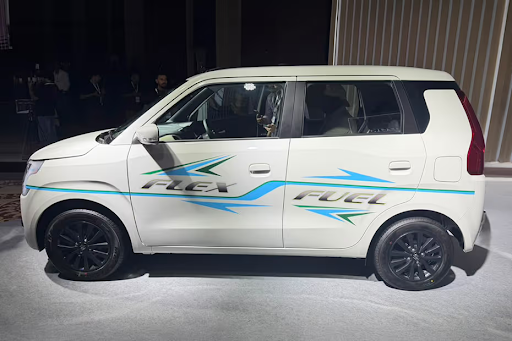
The Wagon R is easy to budget incorrectly because the ex-showroom price is only one part of what you finally pay. Registration, road tax, insurance and optional additions can move the total by a meaningful amount, and those charges vary by state, city and buyer profile. A useful Wagon R on road price calculation therefore starts with the correct live variant price and then builds the local charges around it.
Start with the current ex-showroom variant price
| WagonR variant | Fuel / transmission | Current ex-showroom price |
| LXi MT | Petrol manual | Rs. 4,98,900 |
| VXi MT | Petrol manual | Rs. 5,54,400 |
| LXi CNG | CNG manual | Rs. 5,93,900 |
| ZXi MT | 1.2-litre petrol manual | Rs. 5,98,400 |
| VXi AGS | Petrol automatic | Rs. 5,99,400 |
| VXi CNG | CNG manual | Rs. 6,49,400 |
| ZXi+ AGS | 1.2-litre petrol automatic | Rs. 6,97,400 |
The manufacturer also lists additional higher and flex-fuel configurations. Prices prevailing at invoicing apply, so use these figures as the current starting point and confirm the exact quote before payment.
What is added to reach the on-road amount?
The on-road price of the WagonR depends on the chosen variant and applicable charges. In most cases, the calculation includes the ex-showroom price, RTO or registration-related amounts, road tax where applicable, insurance and smaller statutory or dealer-administered items. State rules can change the registration component substantially. Insurance also varies with insured declared value, add-on covers, discounts and the insurer you choose.
Do not mix mandatory and optional costs
Ask the dealer to separate compulsory charges from accessories, extended warranty, service packages, coatings or convenience kits. Optional products can make a quotation look much higher than another dealer’s even when the core vehicle price is identical. Removing them initially makes it easier to compare two offers. Add back only the items you genuinely want.
Petrol, CNG or automatic can change the budget more than trim
A commuter focused on low fuel expense may look at the CNG versions, while an urban driver who values convenience may prefer AGS. The CNG variant costs more upfront but can reduce fuel cost when monthly running is high. AGS adds ease in traffic but also raises the vehicle price compared with a manual. Decide which of these changes actually solves your use case before moving to cosmetic upgrades.
How much down payment is sensible?
Do not use every available rupee for the down payment. Keep an emergency reserve and account for the first year’s fuel, parking, routine service and any accessories you plan to add later. Once you know the final on-road amount, subtract the safe down payment to find the loan requirement. Then compare EMI using the same rate and tenure across lenders.
Insurance deserves its own comparison
A dealer-arranged policy may be convenient, but you can still compare the cover, deductibles, add-ons and claim support. Avoid choosing purely on premium. For a new car, understand what own-damage cover, third-party cover, zero-depreciation or other add-ons actually do. The cheapest policy can become expensive if it omits protection you expected.
Registration cost is location-specific
Road tax and registration rules differ across states, and some cities have additional requirements. Company registration, individual registration and special series options can also lead to different amounts. This is why a single “India on-road price” is misleading. Use the ex-showroom table above, then obtain the exact RTO component for your registration location.
Keep a copy of the final booking form and the revised quotation if any price or insurance amount changes before delivery. Matching those documents against the invoice is easier than relying on verbal discussions. It also helps you identify optional items that may have been added after the original negotiation.
An on-road quotation is easiest to audit when you separate compulsory costs from optional ones. Ex-showroom price is the base. Registration and applicable road tax are linked to the city and vehicle category. Insurance is required, but the insurer and add-on package can often be compared. Accessories, extended warranty packages, coatings and service products should be shown separately. When a quotation bundles these lines together, ask for a revised itemised version before discussing discounts.
For a financed Wagon R, compare the amount you pay upfront with the amount actually borrowed. Dealer-installed accessories or insurance can sometimes be included in a broader funding conversation, but financing more than necessary increases the amount on which interest is charged. Keep a buffer for first-year running expenses rather than exhausting savings on a higher trim. A comfortable repayment plan should survive routine fuel, parking, service and insurance costs, not only fit the first month’s EMI.
Conclusion
A realistic Wagon R on road price is built from the exact ex-showroom variant plus local registration, insurance and only the optional items you choose. Keep each component visible, compare petrol, CNG and AGS on the same ownership budget, and finance the final required amount rather than a padded dealer quotation. That approach gives you a much clearer idea of what the WagonR will actually cost to put on the road.