

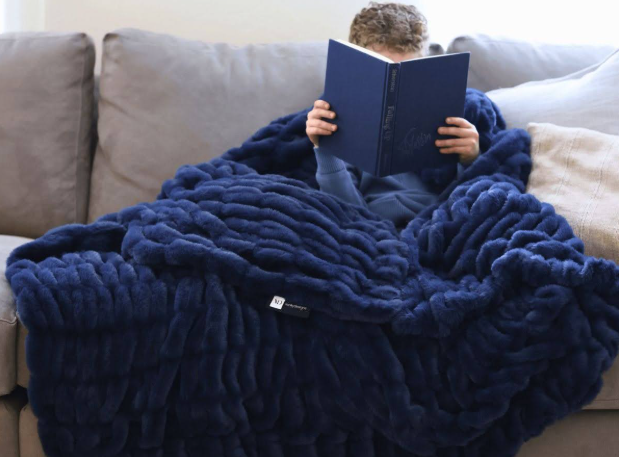
A small textile change can alter a room without replacing the furniture. Colour, surface texture, and the way fabric falls over a chair all influence the result. Choosing a blue throw blanket begins with deciding whether you want a quiet background accent, a strong contrast, or simply a comfortable layer within easy reach.
Start With the Existing Palette
Look at the largest surfaces first: the sofa, bedding, curtains, flooring, and walls. These establish the setting in which a new colour will appear. Notice whether the room already contains blue in artwork, ceramics, or patterned cushions.
A blue throw blanket can repeat an existing detail or introduce a new colour. Neither approach requires matching everything exactly. A related shade may connect the room, while a distinct tone creates a more noticeable accent.
Check the room in daylight and artificial light before deciding. Online photographs are useful references, but screens and lighting can change how a colour appears.
Choose Light or Deep Blue Deliberately
Lighter Tones
Pale and mid-blue shades can provide a gentler contrast against neutral furniture. They may suit a room where the textile should be visible without becoming the main focal point.
Deeper Tones
Navy and other darker blues create stronger contrast against pale upholstery or bedding. They can also connect with darker details elsewhere in the space.
The supplied collection includes both lighter and deeper shades. When comparing a blue throw blanket, examine the individual product photographs rather than assuming every option in the category has the same colour intensity.
Compare Surface Textures
The source describes plush minky fabric and offers smooth and textured styles. Those surfaces can create different appearances even when their colours are similar.
A smoother surface generally produces a cleaner drape, while raised texture makes the material itself more visible. Consider the surrounding fabrics: a heavily patterned sofa may need a different companion from plain bedding.
Choose a blue throw blanket for handling as well as appearance. If possible, examine a fabric sample or review the material description carefully. A photograph cannot fully establish how a textile will feel against the skin.
Measure for Its Main Use
A chair throw, a sofa layer, and a bed accent do not necessarily need the same dimensions. The collection offers multiple sizes, so check the exact measurements of the chosen option.
Before buying:
- Measure the seating or bed area you want covered.
- Decide whether the blanket is primarily decorative or functional.
- Allow for the amount of drape you prefer.
- Check whether one person or two will use it.
- Consider how easily it will fold into nearby storage.
An attractive size in a product photograph may look quite different on larger furniture.
Use Double-Sided Fabric Practically
The supplied page states that its blue designs are double-sided. This is useful when arranging a casual drape because both visible surfaces can form part of the finished appearance.
However, confirm the individual construction details before assuming both sides have identical texture or colour. Product-specific information should guide the choice.
With a blue throw blanket, try a simple fold over an armrest before creating a more elaborate arrangement. A textile intended for regular use should remain easy to pick up and return.
Style Without Creating Clutter
One throw and a small number of cushions may provide enough variation. Adding several competing textures or shades can make an otherwise calm arrangement feel crowded.
Repeat the chosen blue elsewhere in a small detail if you want a more connected palette. Alternatively, let the throw remain the only blue accent and keep other accessories restrained.
For bedrooms, place it across the lower portion of the bed or fold it nearby. On a chair, keep enough of the seat clear for comfortable use.
Read Care Instructions Before Buying
Check blue throw blanket care instructions before purchase.
The collection describes its fabric as suitable for everyday use, but laundering should follow the individual care label. Check detergent, water-temperature, drying, and heat restrictions rather than applying instructions from an unrelated blanket.
Store it clean and dry, and inspect stitching occasionally. Prompt attention to loose threads can prevent a small issue from growing through repeated handling.
Conclusion
A thoughtful choice balances shade, surface texture, useful dimensions, and a realistic care routine. Households comparing warmer neutral alternatives may also consider brown blankets when deciding which palette best suits their furniture. Choose the textile for the room and the people using it, then keep the arrangement comfortable and simple.