
Packaging plays an important role in protecting products, organizing inventory, and preparing goods for transportation. Manufacturers and distributors handling multiple items often need methods that keep products together while maintaining a consistent presentation. Heat-shrink technology provides one approach by wrapping products in film and applying controlled heat to create a close-fitting package. Shrink film bundling equipment supports this process by combining film application, product movement, sealing, and heat exposure into an organized packaging operation. Understanding its components, applications, and selection factors helps businesses identify suitable systems for their production requirements.
What Is Shrink Film Bundling Equipment?
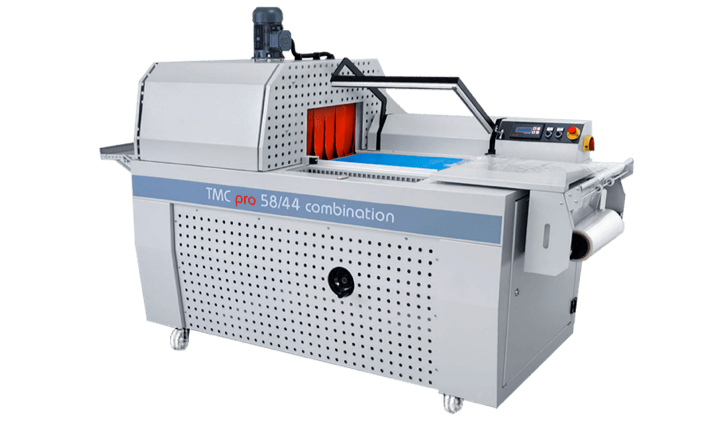
This equipment uses heat-shrinkable plastic film to group individual products into a single packaged unit. The products are arranged in a predetermined configuration, wrapped with film, sealed, and passed through a heat source.
As the film receives controlled heat, it contracts around the products and forms a tighter covering. The finished bundle can then be cooled, inspected, and transferred to storage or distribution.
The process is commonly used when businesses need to package multipacks, promotional combinations, containers, cartons, or other products that benefit from being grouped together.
How Does the Shrink Bundling Process Work?
The packaging operation generally involves several connected stages.
Product Arrangement
Products are positioned in the required configuration before film application. Depending on the production line, this arrangement may be completed manually or through automated feeding and grouping systems.
Consistent positioning is important because irregular product placement can affect film distribution and package appearance.
Film Application
A roll of shrink film supplies the material used to surround the product group. The film is fed around the arranged items, leaving sufficient material for sealing and subsequent shrinking.
Film selection depends on product dimensions, weight, handling requirements, and packaging conditions.
Sealing
The film edges are joined using a sealing mechanism. A suitable seal creates a closed covering that can withstand the next stages of processing.
Seal quality depends on temperature, pressure, dwell time, and the characteristics of the film being used.
Heat Shrinking
The wrapped products pass through a heat-shrink tunnel or another suitable heating arrangement. Controlled heat causes the film to contract around the grouped items.
Temperature and conveyor speed must be adjusted to achieve consistent results without damaging the products or film.
Cooling and Inspection
After heating, the package needs sufficient cooling time before further handling. Operators can then inspect the bundle for incomplete seals, excessive wrinkles, loose film, or other packaging defects.
What Are the Main Applications of Shrink Bundling?
Different industries use shrink bundling to group products for retail display, storage, and transportation.
- Beverage packaging: Bottles and cans can be grouped into multipacks for convenient handling and distribution.
- Food manufacturing: Certain packaged foods can be bundled for retail or wholesale distribution.
- Household products: Cleaning supplies, containers, and other consumer goods may be packaged in grouped quantities.
- Personal care products: Manufacturers can combine related items into promotional or retail packs.
- Industrial goods: Selected components and packaged materials can be grouped to simplify inventory handling.
The suitability of the process depends on product characteristics, packaging regulations, and the required level of protection.
What Factors Should Businesses Consider When Selecting Equipment?
Production Speed
The required output rate is an important selection factor. A small operation may need a relatively simple system, while high-volume production may benefit from automated feeding, sealing, and conveying.
Businesses should evaluate actual production requirements rather than selecting equipment based only on maximum advertised speed.
Product Dimensions and Configuration
The equipment must accommodate the length, width, height, and arrangement of the products being bundled. Adjustable guides and conveyor settings can help accommodate different product sizes.
Film Compatibility
Shrink films differ in thickness, strength, clarity, and shrinking characteristics. The selected equipment should be compatible with the intended film material and its recommended processing conditions.
Available Floor Space
Packaging systems require space for product feeding, machine operation, maintenance access, and finished-package handling. Measuring the available production area before installation helps prevent layout problems.
Maintenance and Operator Safety
Accessible components, clear operating controls, protective guards, and maintenance procedures are important for dependable operation. Employees should receive appropriate training before operating heated sealing systems or moving machinery.
How Can Automation Improve Packaging Efficiency?
Automation can reduce repetitive manual tasks and help maintain consistency across production runs. Depending on the system configuration, automated equipment may control product spacing, film feeding, sealing, conveyor movement, and heat exposure.
A properly selected shrink film bundling equipment can also help businesses coordinate packaging with upstream production and downstream distribution activities.
However, automation does not eliminate the need for quality checks. Operators must monitor film alignment, sealing performance, temperature settings, and package appearance to identify problems before they affect larger production quantities.
Conclusion
Efficient bundling depends on selecting suitable equipment, compatible film, and processing settings that match the products being packaged. Businesses should evaluate production volume, package dimensions, operating space, and maintenance requirements before investing in a system. Proper operator training and routine inspections also support consistent results. Understanding how a shrink packaging machine functions helps manufacturers assess available packaging solutions and determine which configuration can support their production workflow, product handling requirements, and distribution objectives.