

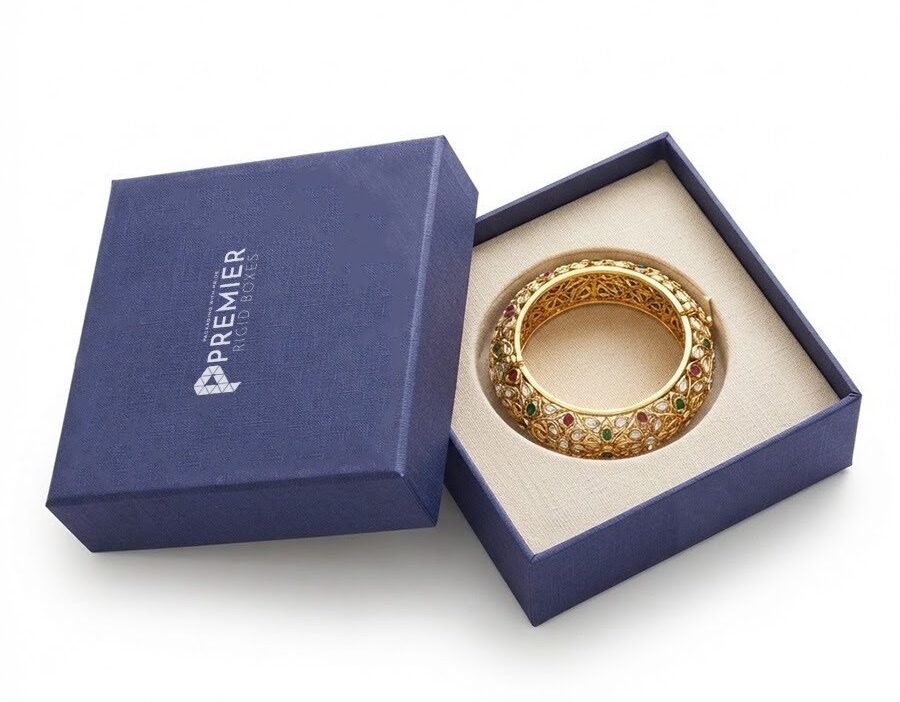
A bangle looks simple enough sitting on a shelf, but it’s actually one of the trickier jewelry shapes to ship without a scratch. It’s rigid, it’s round, and it doesn’t sit flat or fold the way a chain or a pair of earrings does. Drop one into a box without the right interior setup, and it’ll slide, knock against the walls, and pick up marks it never had before it left the workshop. The box itself matters, sure, but what’s inside that box – the insert holding the bangle in place – usually ends up doing more of the actual protective work than people realize.
Why the Insert Matters More Than the Box Shell
A sturdy outer box protects against crushing and rough handling. It doesn’t do much about what happens on the inside if the piece is free to move around. Even in the toughest box, a bangle bouncing around will still knock against the sides during shipping, and for anything polished, plated, or set with stones, that’s exactly how small scratches and chips happen.
This is where the interior insert takes over. Its whole job is to hold the piece exactly where it’s supposed to sit and keep it from moving, no matter how the box gets tossed around between the warehouse and someone’s front door. A well-fitting insert does more to protect a bangle than a slightly thicker box wall ever could.
Common Types of Interior Inserts
A few insert styles show up again and again across bangle packaging, each with its own trade-offs:
- Foam cutouts – shaped precisely to the bangle’s diameter, affordable, but they wear down faster with repeated use
- Molded velvet or flocked inserts – softer against the piece, better at preventing scratches, and generally read as more premium
- Raised stands or pegs – the bangle rests over a small upright post, similar to how a watch might be displayed, works well for thicker or heavier pieces
- Slotted card inserts – a simple option for lighter costume jewelry, cheaper to produce but offers less cushioning than foam or velvet
Choosing between these usually comes down to what the bangle’s actually made of and how much it weighs. A delicate, lightweight piece might do fine with a slotted card insert. A heavier metal bangle or one with inlaid stones generally needs something closer to a molded velvet cutout to stay properly protected.
Insert Comparison at a Glance
| Insert Type | Protection Level | Cost | Best Suited For |
| Foam cutout | Moderate | Low | Budget or mid-range bangles |
| Molded velvet insert | High | Medium-high | Premium or gemstone-set pieces |
| Raised stand/peg | High | Medium | Heavier or thicker bangles |
| Slotted card insert | Low-moderate | Very low | Lightweight costume jewelry |
Fit Is Everything
Even the best insert material fails if the sizing isn’t right. Too loose, and the bangle still has room to shift and knock around during shipping. Too tight, and customers end up wrestling with their own jewelry just to get it out of the box, which isn’t exactly the experience anyone’s going for. Getting that fit dialed in usually takes a bit of back-and-forth with the manufacturer, especially for brands that carry bangles in multiple sizes rather than a single standard diameter.
This is also where many smaller jewelry brands get tripped up when they first move away from generic packaging. A one-size-fits-all insert might technically fit several different bangle sizes, but “technically fits” and “actually protects properly” aren’t the same thing. Brands moving toward custom bangle boxes for jewelry packaging usually do so specifically to achieve a tighter, product-matched fit that generic inserts can’t offer.
Interior Color and Material Choices Matter Too
Protection is the main job, but the interior insert also plays a role in how the piece looks the moment the box opens. A deep navy, black, or burgundy insert tends to make metal and gemstones stand out more than a plain white one does. Velvet and flocked materials also feel noticeably nicer against the skin when someone’s lifting the piece out, which sounds minor but actually factors into how premium the whole experience feels.
Some brands go a step further and match the insert color to their overall packaging palette rather than defaulting to a standard neutral tone. It’s a small design choice, but it reinforces brand identity in a spot where most customers don’t expect much thought to have gone into it.
Getting the Manufacturing Right
Not every packaging supplier handles insert design well, even if they’re perfectly capable of producing a solid outer box. Molded velvet inserts specifically require more precise tooling than a basic foam cutout, and getting the depth and shape exactly right takes some back-and-forth with samples before locking in a full production run.
A company like Premier Rigid Boxes specializes in rigid boxes and insert construction, which tends to mean better consistency in how snugly a bangle sits and how well the insert holds up after repeated opening and closing. Requesting a physical sample before committing to a bulk order is worth the extra step here, too, since it’s hard to judge fit and cushioning from a photo or spec sheet alone.
FAQ
Do all bangle boxes need a custom insert, or does a generic one work fine?
Custom inserts can work for lightweight, lower-cost pieces, but anything premium, gemstone-set, or plated benefits significantly from a fitted insert built for that specific bangle size.
What’s the most protective insert material for bangles?
Molded velvet or flocked inserts tend to offer the best combination of cushioning and scratch protection, especially for polished or plated finishes.
Can one insert design fit multiple bangle sizes?
Not well. A loose fit defeats the purpose of the insert, since the piece can still shift during shipping. Brands that carry multiple sizes usually need a few insert variations rather than a single universal design.
Does insert color actually matter, or is it just cosmetic?
It’s mostly about presentation, but a well-chosen color makes the piece stand out more visually the moment the box opens, which enhances the overall unboxing experience.
Are custom inserts expensive to produce?
They cost more than a basic foam cutout, but usually not dramatically so, and the reduction in damaged or returned pieces often makes up the difference over time.
Final Words
The box gets most of the credit when people talk about jewelry packaging, but the interior insert does much of the quiet, unglamorous work of keeping a bangle safe. Get the insert material, fit, and color right, and a bangle arrives looking exactly the way it did when it left the workshop. Skip that step, or default to whatever generic insert happens to be on hand, and even the sturdiest box won’t stop small scratches and dings from finding their way onto a piece that deserved better protection than that.