

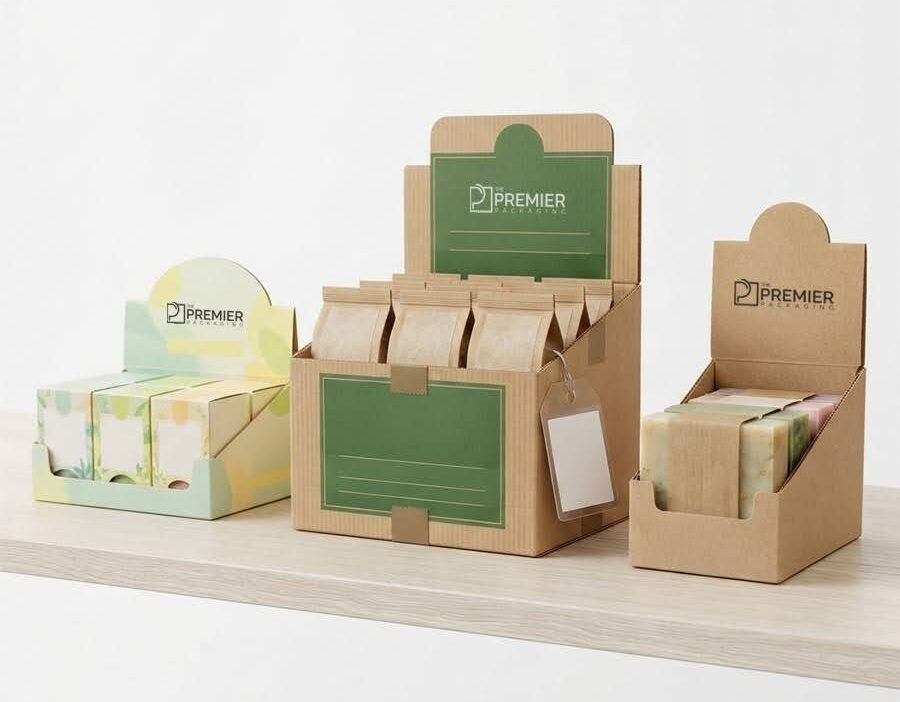
Display packaging has a different job than most other packaging types, and it’s easy to underestimate how much that changes the design process. A shipping box just needs to survive a delivery truck. Display design packaging needs to survive that same trip and then actually sell the product once it’s sitting on a shelf, in a store aisle, or on a countertop next to a dozen competing brands fighting for the same bit of attention.
That dual purpose is where a lot of businesses run into trouble, because designing for protection and designing for visibility don’t always pull in the same direction.
Start With Where It’s Actually Going to Sit
Before anything else, it helps to know exactly where this packaging will live once it’s in a store. A box designed for a countertop display near a register needs a completely different footprint than one meant for a shelf display or a floor stand near an entrance. Countertop displays need to be compact and eye-level-friendly. Shelf displays need to fit within tight vertical space while still standing out among neighboring products. Floor displays have more room to work with but need sufficient structural stability to remain upright throughout a full day of shoppers brushing past them.
Skipping this step is one of the most common mistakes brands make. A design that looks great in a rendering can fall apart once it’s actually placed in the environment it was meant for, either because it doesn’t fit the allotted space or because it just doesn’t catch anyone’s eye at that particular sightline.
Structural Stability Matters More Than People Expect
Display design packaging often gets handled more than standard retail packaging. Customers pick items up, put them back, sometimes not quite where they found them. Store employees restock shelves throughout the day. A display that can’t hold its shape under repeated handling starts to look worn and messy within days, which undercuts the whole point of having an attractive display in the first place.
This is a major reason why 1-2-3 bottom-lid-style display boxes have become such a popular structural choice. The design uses a straightforward folding base that locks into a stable shape without needing glue or extra assembly steps at the store level, which matters a lot when store staff are the ones setting these up rather than trained warehouse workers. A box that’s fussy to assemble often ends up half-built or skipped altogether by a busy employee trying to get through a stockroom’s worth of tasks.
Visual Design Needs a Clear Hierarchy
A display box that tries to say everything at once usually ends up saying nothing memorable. Good display packaging design generally follows a pretty simple hierarchy: a strong visual or logo that catches the eye first, a product name or key selling point that reinforces it, and any smaller details or claims tucked in afterward. Overloading the box with text or competing visual elements tends to dilute the overall message rather than strengthen any single one.
Color plays into this more than a lot of businesses account for early on. A display box needs to work in whatever lighting a retail environment actually uses, which isn’t always flattering. Colors that look rich and saturated in a design file can look flat or washed out under fluorescent store lighting. Testing a physical proof under real store-like lighting conditions before finalizing a full production run can save a business from a rollout that looks noticeably worse in person than it did on screen.
Material Choice Affects More Than Just Durability
The material a display box is built from does more than determine how sturdy it is. It also shapes how the whole thing feels and reads to a customer walking by. A few things worth weighing when picking material:
- Heavier board stock generally holds shape better for taller or top-heavy displays
- Lighter stock keeps shipping costs down, but may need reinforcement for larger displays
- Coated or laminated finishes resist wear and fingerprints better over a longer display period
- Uncoated or kraft-style finishes give a more natural, understated look that suits certain brand identities better than a glossy finish would
There’s no universally right answer here. A premium skincare brand and a hardware accessory brand will want very different finishes, even if the structural needs are nearly identical.
Don’t Forget How It Gets There
A display box that looks perfectly assembled in a showroom doesn’t help much if it arrives at the store already crushed or misshapen. Flat-pack shipping is common for display packaging because it allows a large number of units to travel efficiently before being popped into shape at the retail location. Designing with that flat-pack stage in mind – making sure fold lines are strong enough to survive repeated handling before final assembly – matters just as much as designing the finished, standing version of the box.
Working With a Manufacturer Who Understands Retail Display Needs
Display packaging has enough specific requirements – structural stability, easy in-store assembly, print quality that holds up under retail lighting – that it’s worth working with a manufacturer who’s actually built this kind of packaging before rather than a general supplier treating it like any other box. Get custom 1-2-3 bottom display lid boxes from The Premier Packaging if you’re looking for a manufacturer that specializes in exactly this kind of retail-ready construction, since that specific structural style has become one of the more reliable choices for brands that need something sturdy, easy to assemble on-site, and visually strong enough to hold its own on a crowded shelf.
Final Words
Designing display packaging well means thinking beyond the product itself and into the actual retail environment it’s headed for. Where it’ll sit, how often it’ll get handled, what the lighting will actually look like, how it survives the trip from flat-pack to fully assembled – all of that shapes whether a display does its job or just becomes another piece of cardboard shoppers walk past without noticing. Get those fundamentals right, and the packaging stops being an afterthought and starts pulling its weight as an actual part of how the product gets sold.