

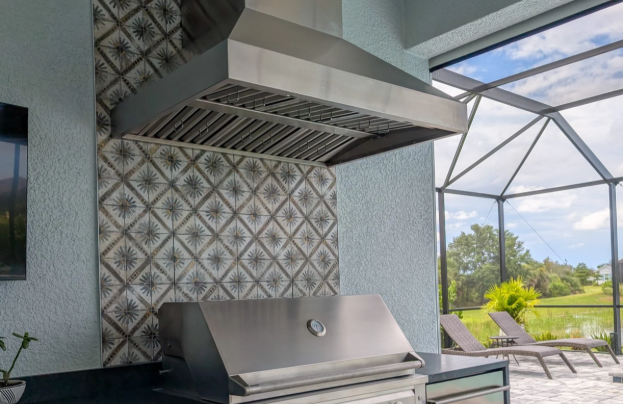
Outdoor cooking areas bring together food preparation, entertainment, and open-air living. However, grilling can generate considerable smoke, grease, heat, and odours, particularly when using charcoal, wood, or high-temperature gas burners. Without appropriate extraction, these byproducts can collect beneath covered patios and outdoor kitchen structures. So you need refined outdoor BBQ grill vent hoods. Understanding ventilation requirements helps create a more comfortable and functional grilling environment.
Why Outdoor Grilling Requires Dedicated Ventilation
Outdoor grilling differs from conventional indoor cooking because grills can produce heavier smoke and grease emissions. High-temperature searing, flare-ups, and cooking fatty ingredients can increase the amount of exhaust released into the surrounding area.
Although outdoor spaces allow some smoke to disperse naturally, covered patios, pergolas, and enclosed cooking structures can restrict airflow.
Outdoor BBQ grill vent hoods are designed to capture cooking emissions above the grill and move them away from the preparation area. Their performance depends on blower capacity, hood dimensions, installation height, and the layout of the outdoor structure.
A properly planned system can help reduce lingering smoke and airborne grease while improving visibility around the cooking surface.
Understanding Airflow and CFM Requirements
Airflow capacity is measured in cubic feet per minute, commonly abbreviated as CFM. It indicates the volume of air a blower can move in one minute.
However, a higher CFM rating does not automatically guarantee effective smoke capture. The hood must also have sufficient depth and width to cover the cooking surface.
Other factors include:
- Distance between the grill and hood.
- Duct diameter and overall length.
- Number of duct bends.
- Exhaust outlet position.
- Filter construction.
- Local wind conditions.
These factors influence how effectively outdoor BBQ grill vent hoods manage cooking emissions.
Materials and Weather Resistance
Outdoor appliances experience environmental conditions that indoor equipment generally avoids. Rain, humidity, sunlight, temperature changes, and airborne contaminants can affect exposed metal surfaces.
Stainless steel is frequently used because it provides strength and corrosion resistance. Grade 304 stainless steel is particularly useful in demanding outdoor settings because its chromium and nickel composition provides greater resistance to corrosion than many lower-grade alternatives.
Outdoor BBQ grill vent hoods should be selected according to their intended exposure. A covered patio has different environmental demands from an uncovered cooking station exposed to rain and coastal air.
Even weather-resistant equipment requires routine cleaning and inspection.
Different Mounting Configurations
The structure of an outdoor kitchen determines which mounting arrangement is most suitable.
Wall-Mounted Systems
Wall-mounted units attach above a grill positioned against an exterior wall. They can be incorporated into masonry structures or outdoor kitchen cabinetry, provided the mounting surface supports the appliance.
Under-Cabinet Systems
These models fit beneath an overhead cabinet or enclosure. They are useful when the outdoor kitchen design already includes a built-in overhead structure.
Island Configurations
Island hoods are installed above cooking stations positioned away from walls. Their design must account for ceiling support, duct routing, and smoke capture from multiple directions.
The appropriate configuration depends on the location of the grill, available structural support, and exhaust routing.
Ductwork and Installation Planning
Most dedicated outdoor grill ventilation systems use ducted extraction. This means contaminated air travels through ductwork and exits outside the cooking structure rather than being returned through an indoor recirculation system.
Duct sizing should follow the manufacturer’s specifications. Reducing duct diameter or adding unnecessary bends can increase resistance and reduce effective airflow.
Cleaning and Long-Term Performance
Grease filters require regular cleaning because accumulated grease can restrict airflow and increase fire risk. Stainless steel surfaces should be cleaned using compatible products that do not damage the finish.
Inspect blower operation, lighting, duct connections, and exterior fasteners periodically. Outdoor equipment should also be checked after severe weather.
Conclusion
Selecting outdoor grill vent hoods involves more than comparing blower ratings. Coverage, material quality, mounting configuration, ductwork, and environmental exposure all influence ventilation performance.
A properly specified outdoor kitchen vent hood can help manage smoke and grease while supporting a more comfortable grilling environment. Careful planning also reduces installation complications and makes routine maintenance easier.