
Bulk coffee sourcing requires a supplier that can meet product specifications, production volumes, packaging needs, and delivery schedules. Businesses must also decide whether they need finished coffee products, bulk ingredients, or private-label service. Evaluating these requirements early helps buyers choose the right manufacturing partner and avoid gaps in product development.
Understand the Coffee Formats You Need
Start by defining the product format. Instant coffee may be available as spray-dried, agglomerated, or freeze-dried powder. Roasted coffee beans and ground coffee serve different applications and require separate specifications. Each format has its own processing, packaging, and storage considerations.
An instant coffee manufacturer should explain the differences between available formats and help buyers match them to the intended use. For example, solubility, aroma retention, color, bulk density, and cup profile may influence the choice for vending, retail, food service, or ready-to-mix products.
Also confirm whether the manufacturer can support repeat production using the same approved profile. A documented reference specification helps reduce variation between initial and subsequent orders.
Assess Manufacturing and Quality Controls
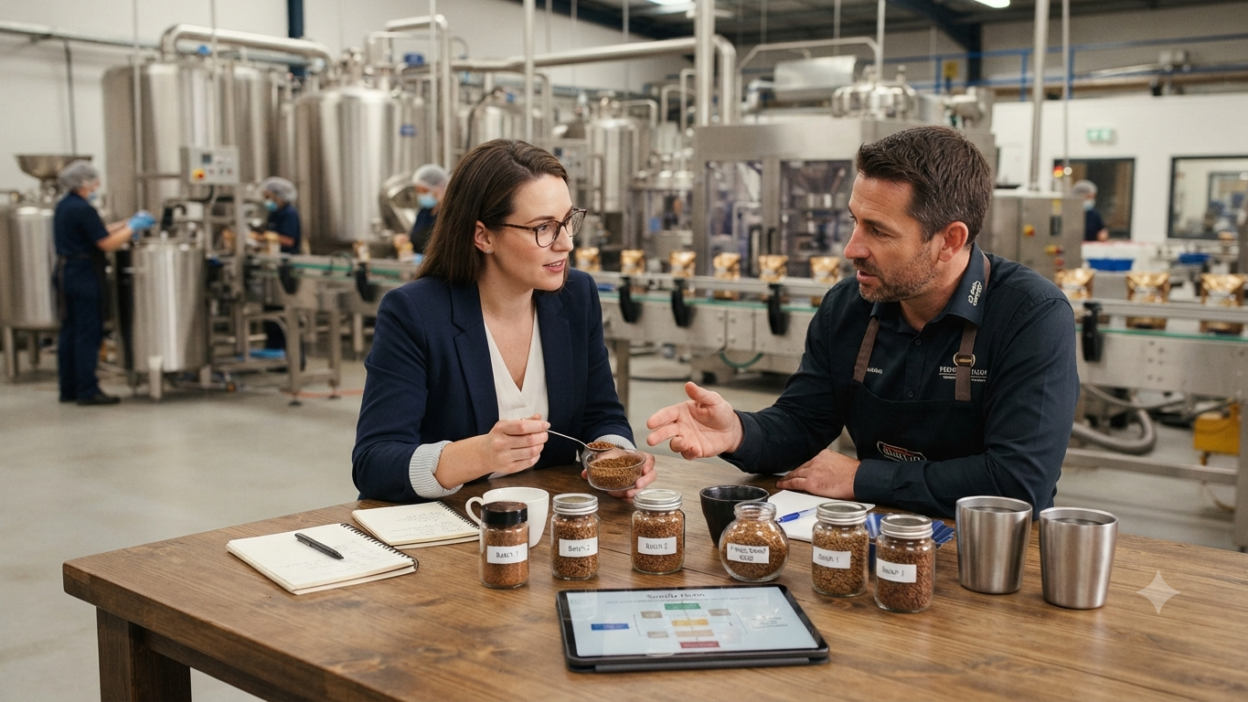
Review the manufacturer’s production capabilities and quality management systems. Ask how raw materials are checked, how production batches are identified, and which tests are carried out on finished products. Request a current product specification and a representative sample.
Evaluate the coffee’s aroma, taste, color, solubility, and performance in the final application. For instant formats, test the powder in the actual preparation conditions, including water temperature and dosage. For roasted beans, assess the roast profile and cup characteristics.
Batch documentation should support traceability and help the buyer verify that deliveries meet agreed requirements. Depending on the product and destination, documents may include a Certificate of Analysis, product specification, and applicable food safety or export documents.
Compare Bulk Supply and Private Label Options
Bulk supply suits businesses that already have their own packing, branding, or downstream manufacturing arrangements. Buyers should confirm bulk pack sizes, pallet configuration, storage conditions, and order quantities before finalizing a contract.
A private label tea extract manufacturer may offer additional services, such as retail packing, custom pack sizes, label application, and support with product specifications. Confirm which services are included and which require separate arrangements. Agree on packaging artwork, label approvals, and regulatory checks before production.
For both models, clarify ownership of packaging materials, artwork approval, rejected stock, and any changes to the product specification. Written agreements reduce the risk of delays or misunderstandings.
Ask for a production schedule that identifies the approval deadline for samples and artwork. This is particularly important for launches with fixed retail dates, promotional periods, or seasonal demand.
Check MOQ, Lead Time, and Supply Reliability
Minimum order quantities can differ by product format, packaging type, and production schedule. Ask for the MOQ for each product line rather than relying on a single figure. Confirm whether trial quantities are available for product evaluation.
Lead times should cover raw material planning, production, quality checks, packing, and dispatch. Ask how the manufacturer communicates delays and whether repeat orders can be scheduled in advance. Businesses with seasonal demand should share forecasts early.
A supplier offering consistent high-yield flavor extracts and standardized batch stability may also be relevant when coffee extracts form part of a wider beverage range. Confirm the extract format, concentration, and performance specifications separately.
Review Customization and Technical Support
Ask whether the manufacturer can adjust roast profiles, blend composition, grind size, or instant coffee characteristics. Record any customization in an approved specification and validate it with samples before bulk production.
Custom blend development tailored for beverage and food service applications can support businesses with specific menu or formulation needs. Test each proposed change for taste, solubility, shelf stability, and production compatibility.
Conclusion
The right coffee manufacturing partner should combine suitable product formats, documented quality controls, transparent commercial terms, and dependable supply planning. Compare samples and specifications before committing to bulk or private label production. Clear agreements on packaging, lead times, and product standards help maintain consistency as the business grows.