


You search for a hair and skin clinic in Bangalore and get pages of options. Every clinic looks confident, and every website promises visible results. It is hard to know whom to trust.
Hair fall, stubborn acne, or uneven skin tone can dent your confidence. Choosing wrongly can cost you months, money, and more worry.
The good news is that you do not need medical training to choose well. You only need the right questions. This guide gives you ten, grouped so you can use them in the consultation room.
Why the Right Hair and Skin Clinic in Bangalore Matters?
Skin and hair problems often look simple but have many causes. A wrong guess can delay the right treatment. The American Academy of Dermatology notes that hair loss has many causes. It says the right diagnosis is critical for a successful treatment plan.
Acne is another example. According to NICE guidance, acne affects about 80% of people at some point between ages 11 and 30. It is common, yet each case needs its own plan. Kosmoderma clinical guidance adds a local view. It says pollution and sun exposure affect skin in Bangalore, and hard water can affect hair.
Questions About the Doctor and Their Experience
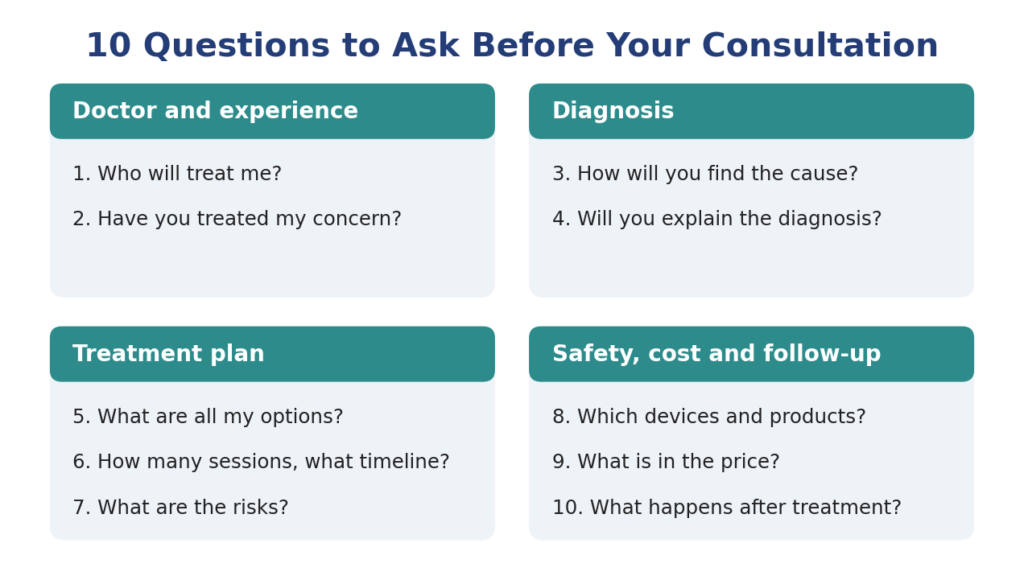
1. Who will diagnose and treat me?
Ask for the doctor’s name, qualification, and registration. A dermatologist is a doctor who specialises in conditions of the skin, hair, and body. The clinic website should name each doctor and describe their experience.
Also ask whether a doctor or a technician will perform the procedure. At Kosmoderma, treatments are led by MD-certified dermatologists, according to the clinic’s own guidance.
2. Have you treated my exact concern before?
Skin and hair care covers many conditions. Not every doctor has equal experience with each one. Ask how often the clinic treats your specific concern, such as acne, pigmentation, ageing, or hair thinning.
Questions About Diagnosis
3. How will you find the cause of my problem?
A good clinic begins with questions about your history, routine, and medicines. It then examines the affected skin or scalp. Kosmoderma says it begins hair care with a scalp and hair root evaluation.
Its guidance also notes that hair thinning and hair loss can have different underlying causes.
4. Will you explain the diagnosis before suggesting treatment?
You should leave knowing what is wrong, in plain words. The AAD notes that the pattern or location of hair loss can sometimes point to the diagnosis. That is why an examination matters before any treatment is chosen.
Questions About Your Treatment Plan
5. What are all my options?
Ask about treatment options, skincare routines, and lifestyle changes, not only procedures. A trustworthy clinic also explains simpler options. Kosmoderma guidance says early care helps slow hair loss and protect existing hair.
“For us, responsible aesthetic medicine will always matter more than trend-driven treatments,” says Dr. Nistha, Medical Head, Kosmoderma Skin, Hair & Body Clinics.
6. How many sessions will I need, and when will I see change?
Skin and hair respond slowly. Ask for a realistic timeline and an estimate of sessions. Kosmoderma guidance says results vary by treatment, condition, and individual response.
Be careful with promises of instant or guaranteed results. No honest doctor can promise them.
7. What are the risks and side effects?
Every treatment has possible side effects. Laser treatment is a good example. Kosmoderma says the right laser depends on your skin tone, and the wrong settings can cause side effects.
Ask what to expect, and whom to call if something feels wrong.
Questions About Safety, Cost and Follow-Up
8. Which devices and products do you use?
Ask for the device or product name and whether it has recognised regulatory approval. A clear answer shows a clinic that has nothing to hide. Ask the same about injectable and prescription medicines.
9. What is included in the price?
Prices depend on the concern, the treatment, the area and the number of sessions. Ask for a written breakdown of consultation, procedures, and aftercare, and whether it covers one session or a course. Kosmoderma guidance says costs are discussed during the consultation, with a breakdown based on your needs.
10. What happens after treatment?
Healing and results need follow-up. Ask how reviews are scheduled and how to reach the clinic with concerns. Keep your doctor’s follow-up appointments, as the AAD advises for hair loss care.
How to Prepare for Your Consultation
A little preparation makes the visit more useful. Bring these with you:
- A note of your main concerns and when each began
- A list of medicines, supplements and products you use
- Any family history of skin or hair problems
- Past reports or prescriptions, if you have them
- Your written questions from this guide
Clear information helps your doctor reach a diagnosis with more confidence. It also keeps the consultation focused on you.
Red Flags to Watch For
- Promises of guaranteed or instant results
- Pressure to buy large packages on the first visit
- No clear doctor name or qualification
- No written quote or follow-up plan
- Reluctance to answer your questions
How to Shortlist a Hair and Skin Clinic in Bangalore?
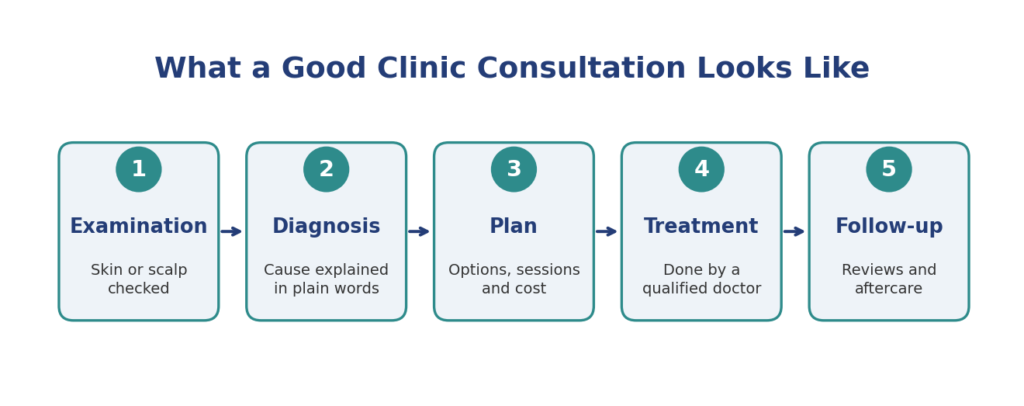
Use the ten questions as a scorecard. Visit or call two or three clinics and compare answers side by side. If you are comparing skin care Bangalore options, favour the clinic that explains, not the one that pressures.
A good consultation includes an examination, a clear explanation, and realistic expectations. You can read how dermatologist-led hair and skin care at Kosmoderma approaches personalised treatment plans.
Final Thoughts
Choosing a hair and skin clinic in Bangalore is easier with the right questions. Good clinics welcome them, explain clearly, and respect your pace. The best choice is an informed one.
If you are unsure where to begin, consulting a qualified dermatologist can save you time, money, and frustration.
Disclaimer: This article is for general information only and does not replace professional medical advice, diagnosis, or treatment. Please consult a qualified dermatologist about your individual skin and hair concerns. Results vary from person to person.