

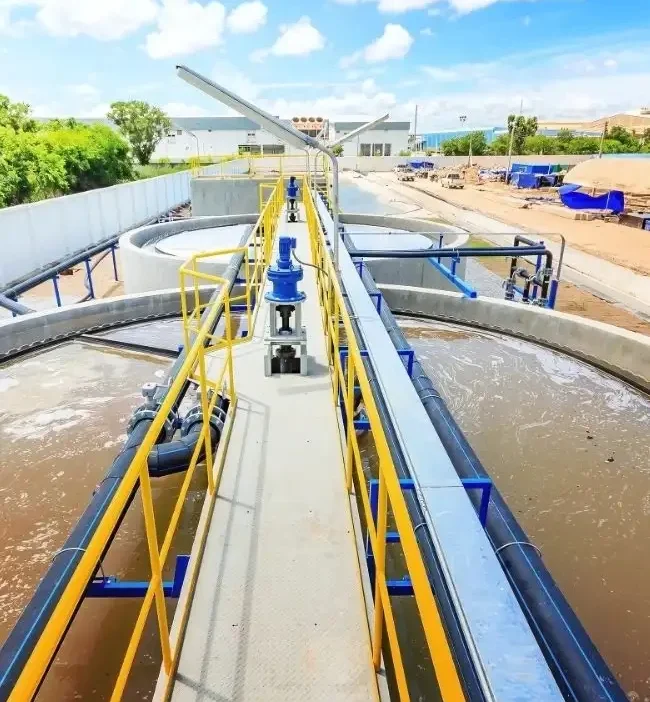
Wastewater is a normal part of many business and industrial operations. Manufacturing, food processing, textiles, pharmaceuticals, chemicals, hotels, hospitals, and other facilities generate wastewater every day.
Managing this wastewater properly is important not only for environmental protection but also for maintaining smooth business operations. However, wastewater treatment is not always straightforward. Changes in wastewater quality, equipment problems, poor maintenance, and incorrect system sizing can affect treatment performance.
A properly designed Waste Water Treatment Plant can help businesses manage these challenges more effectively.
In this article, we will look at some common wastewater treatment challenges and practical ways businesses can address them.
What Is Wastewater Treatment?
Wastewater treatment is the process of removing or reducing unwanted pollutants from water before it is discharged, reused, or sent for further treatment.
Depending on the source and quality of wastewater, treatment can involve several stages, such as:
- Screening
- Equalization
- pH adjustment
- Coagulation and flocculation
- Primary clarification
- Biological treatment
- Secondary clarification
- Filtration
- Disinfection
- Sludge management
The exact treatment process depends on the wastewater characteristics and the quality of treated water required.
Why Do Businesses Face Wastewater Treatment Challenges?
One of the biggest challenges is that wastewater is not always consistent.
The quality and quantity of wastewater can change depending on production schedules, raw materials, cleaning activities, operating hours, and other factors.
A treatment plant designed without considering these variations may struggle to maintain consistent performance.
Let’s look at some of the most common challenges.
1. Changing Wastewater Quality
Wastewater characteristics can change throughout the day or from one production cycle to another.
For example, a manufacturing facility may generate different wastewater during normal production compared with equipment cleaning or chemical processing.
Changes can occur in:
- pH
- BOD
- COD
- TSS
- TDS
- Oil and grease
- Colour
- Temperature
- Specific chemicals
How Can Businesses Manage It?
Regular wastewater testing is an important first step.
An equalization tank can also help manage variations by collecting wastewater and providing a more consistent flow to downstream treatment stages.
This can make the biological and chemical treatment processes easier to control.
2. Incorrect Plant Capacity
A wastewater treatment plant needs to handle the actual wastewater flow generated by a facility.
If the plant is undersized, excessive flow can overload treatment units and reduce treatment efficiency.
On the other hand, an unnecessarily oversized system can increase installation and operating costs.
How Can Businesses Manage It?
Businesses should evaluate:
- Average daily wastewater generation
- Peak flow
- Production schedules
- Seasonal variations
- Future expansion plans
- Operating hours
Plant capacity should be selected based on actual operating requirements rather than a simple estimate.
3. High BOD and COD
BOD (Biochemical Oxygen Demand) and COD (Chemical Oxygen Demand) are important parameters for understanding the organic load in wastewater.
High BOD and COD can place a significant load on biological treatment systems.
If the treatment process is not properly designed or operated, the desired reduction may not be achieved.
How Can Businesses Manage It?
The treatment system should be selected according to the actual characteristics of the wastewater.
Depending on the application, treatment may involve biological processes such as MBBR, activated sludge, SBR, or other suitable technologies.
Regular monitoring can also help operators identify changes in organic loading before they become major problems.
4. Excessive Sludge Production
Sludge is a natural by-product of many wastewater treatment processes.
If sludge is not removed regularly, it can accumulate in tanks and affect treatment performance.
Excessive sludge can also create storage, handling, and disposal challenges.
How Can Businesses Manage It?
A proper sludge-management plan should be included in the overall plant design.
Depending on the plant and sludge characteristics, businesses may use processes such as:
- Sludge thickening
- Filter press
- Centrifuge
- Drying systems
- Dewatering equipment
The appropriate method depends on the quantity and characteristics of the sludge.
5. Poor pH Control
Many treatment processes work effectively only within a suitable pH range.
Industrial wastewater can sometimes be highly acidic or alkaline. Sudden changes in pH can affect chemical treatment as well as biological processes.
How Can Businesses Manage It?
A pH monitoring and adjustment system can help maintain suitable operating conditions.
Depending on the wastewater, acid or alkaline chemicals may be used for pH correction.
Continuous monitoring can be particularly useful when wastewater quality changes frequently.
6. Membrane Fouling in Advanced Treatment
Some modern wastewater treatment systems use membrane technologies such as MBR or RO.
Membranes can experience fouling due to suspended solids, organic matter, scaling, and other contaminants.
Fouling can result in reduced flow, increased pressure, and more frequent cleaning.
How Can Businesses Manage It?
Proper pretreatment is important.
Businesses should also monitor membrane pressure, flow, water quality, and cleaning requirements.
Following the equipment manufacturer’s operating and cleaning recommendations can help maintain membrane performance.
7. Equipment Failure
Pumps, blowers, mixers, valves, dosing systems, sensors, and other components are essential to plant operation.
Failure of a critical component can interrupt treatment.
How Can Businesses Manage It?
Preventive maintenance should be part of routine plant management.
Businesses can maintain a schedule for:
- Pump inspection
- Blower maintenance
- Valve inspection
- Sensor calibration
- Electrical-panel checks
- Dosing-system inspection
- Pipeline inspection
Keeping important spare parts available can also reduce unexpected downtime.
8. Inadequate Aeration
Biological treatment systems often require controlled oxygen supply.
If aeration is insufficient, microorganisms may not receive the oxygen needed for effective biological treatment.
If aeration is excessive, energy consumption may increase unnecessarily.
How Can Businesses Manage It?
Dissolved oxygen and biological-process conditions should be monitored regularly.
Blower capacity and aeration equipment should be selected according to the treatment requirements.
Proper control can help balance treatment performance and energy consumption.
9. Poor Chemical Dosing
Chemical treatment may be used for pH adjustment, coagulation, flocculation, disinfection, or other purposes.
Incorrect dosing can result in poor treatment performance and unnecessary chemical consumption.
How Can Businesses Manage It?
Dosing should be based on wastewater characteristics and appropriate operating conditions.
Operators should regularly check dosing pumps, chemical storage, injection points, and dosing rates.
Where appropriate, automated dosing and monitoring can improve consistency.
10. Lack of Regular Monitoring
A wastewater treatment plant should not be treated as a system that can simply be switched on and left unattended.
Without regular monitoring, problems may remain unnoticed until treated-water quality starts deteriorating.
How Can Businesses Manage It?
Businesses should monitor relevant parameters according to their treatment process.
These may include:
- pH
- Flow
- BOD
- COD
- TSS
- Dissolved oxygen
- Sludge levels
- Pressure
- Treated-water quality
Regular records can help operators identify trends and respond to problems earlier.
11. High Operating Costs
Electricity, chemicals, labour, maintenance, sludge handling, and replacement parts all contribute to wastewater treatment costs.
A plant that is poorly designed or operated can consume more resources than necessary.
How Can Businesses Manage It?
Businesses should consider total operating costs during plant selection.
Energy-efficient pumps and blowers, appropriate chemical dosing, proper aeration control, and regular maintenance can help improve operational efficiency.
Water reuse can also provide additional value where technically and economically suitable.
12. Difficulty in Reusing Treated Water
Many businesses are interested in reusing treated wastewater for suitable applications.
However, treated water may require additional treatment before it can be reused.
The required quality depends on the intended application.
For example, water intended for gardening may have different quality requirements from water intended for cooling or process use.
How Can Businesses Manage It?
Businesses should first identify where treated water could be reused.
Additional treatment such as filtration, disinfection, UF, RO, or other processes may be considered depending on the required water quality.
A reuse strategy should be developed as part of the overall water-management plan.
The Importance of Proper Plant Design
Many wastewater treatment problems can be reduced through proper planning and design.
Before installing a treatment plant, businesses should understand:
- Wastewater source
- Wastewater quantity
- Wastewater characteristics
- Peak flow
- Required treated-water quality
- Available installation space
- Sludge generation
- Chemical requirements
- Energy requirements
- Future expansion
A plant designed around actual site conditions is more likely to provide reliable performance.
How to Choose a Waste Water Treatment Plant Manufacturer in India
Choosing the right Waste Water Treatment Plant Manufacturer in India is an important decision for businesses.
A manufacturer should be able to understand the wastewater characteristics rather than simply recommending a standard plant.
Before making a decision, businesses should consider the manufacturer’s:
- Technical experience
- Wastewater testing and analysis approach
- Plant design capabilities
- Treatment technology knowledge
- Equipment quality
- Customization options
- Installation and commissioning support
- Automation capabilities
- Maintenance services
- Spare-parts availability
- After-sales support
A good manufacturer should also be willing to understand the specific application and operating conditions of the facility.
Why Regular Maintenance Matters
Even a well-designed treatment plant requires regular maintenance.
Maintenance helps identify small problems before they develop into larger operational issues.
A practical maintenance program may include daily checks, periodic equipment inspections, water-quality testing, calibration, cleaning, and preventive replacement of components where necessary.
Operators should also maintain records of plant performance and maintenance activities.
Common Mistakes Businesses Should Avoid
Some wastewater treatment problems are caused by avoidable mistakes.
Businesses should avoid:
Installing a Plant Without Proper Wastewater Analysis
Treatment should be based on actual wastewater characteristics.
Ignoring Peak Flow
Average flow alone may not represent the maximum load entering the plant.
Selecting Technology Based Only on Price
The cheapest system may not provide the best long-term value.
Neglecting Sludge Management
Sludge handling should be considered during the initial design stage.
Ignoring Operator Training
Operators should understand the plant’s treatment process, controls, maintenance requirements, and safety procedures.
Delaying Maintenance
Small equipment problems can become expensive failures when maintenance is ignored.
A Practical Approach to Better Wastewater Management
Businesses can improve wastewater treatment performance by following a structured approach:
Step 1: Understand the wastewater
Test the wastewater and identify its major characteristics.
Step 2: Measure the flow
Determine average and peak wastewater generation.
Step 3: Define the treated-water requirement
Decide whether the water will be discharged, reused, or sent for additional treatment.
Step 4: Select suitable technology
Choose treatment processes based on the wastewater characteristics and required output.
Step 5: Plan for sludge
Include sludge handling and disposal or further processing in the plant design.
Step 6: Monitor performance
Regularly check important treatment parameters.
Step 7: Maintain the system
Follow preventive maintenance schedules and manufacturer recommendations.
This approach can help businesses build a more reliable and manageable wastewater treatment operation.
How Spring Ion Exchange Can Support Water Treatment Needs
Spring Ion Exchange provides water and wastewater treatment solutions for industrial and commercial applications.
Businesses looking for a wastewater treatment solution can begin by evaluating their wastewater source, flow, quality, treatment objectives, and reuse requirements. Based on these factors, an appropriate treatment system can be planned for the application.
Final Thoughts
Wastewater treatment can present different challenges depending on the industry, wastewater characteristics, plant capacity, and treatment technology.
The good news is that many of these challenges can be managed through proper wastewater analysis, suitable plant design, regular monitoring, preventive maintenance, and trained operation.
Ultimately, effective wastewater treatment is not just about treating water. It is about building a consistent, manageable, and responsible approach to water use and wastewater management.