
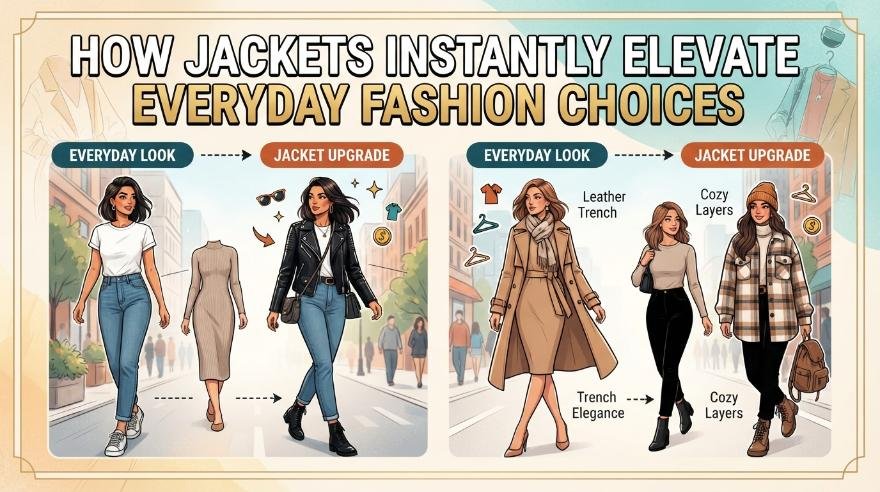
Getting dressed every day does not have to mean building an entirely new outfit from scratch. Often, the difference between a basic look and one that feels intentional comes down to a single layer. A well-chosen jacket can add structure, personality, texture, warmth, and visual balance to an otherwise simple combination of clothing.
That versatility is what makes jackets such an important part of modern wardrobes. A plain T-shirt and jeans can feel relaxed and casual, while the addition of a bomber creates a more defined streetwear aesthetic. A lightweight jacket can make an everyday outfit feel seasonally appropriate, while a distinctive color or pattern can turn familiar basics into a memorable look.
Jackets also make it easier to experiment with personal style without replacing an entire wardrobe. Instead of buying multiple complete outfits, shoppers can rotate a few versatile outer layers over existing shirts, sweaters, trousers, denim, and sneakers. The result is a wardrobe that feels larger, more flexible, and considerably easier to style.
Why Jackets Have Such a Powerful Impact on Everyday Style
The visual impact of outerwear comes from its position within an outfit. A jacket generally sits over several other garments, making it one of the first elements people notice. Its silhouette, color, material, collar, pockets, hardware, and overall proportions can influence the character of everything underneath it.
For that reason, jackets are more than practical protection against changing weather. They can act as the visual anchor of an outfit. A structured jacket introduces definition, while a relaxed silhouette creates an effortless appearance. A bold color can become the focal point, whereas a neutral jacket can quietly tie different pieces together.
There is also a practical advantage. Jackets can transition between different settings with relatively small styling changes. The same outer layer might work with jeans and sneakers during the day, then look more polished with chinos and cleaner footwear later.
- Instant structure: Outerwear can give shape to simple everyday clothing.
- Layering flexibility: Jackets work over T-shirts, knitwear, hoodies, and shirts.
- Seasonal adaptability: Different weights and materials make layering useful throughout the year.
- Visual personality: Colors, patterns, textures, and silhouettes communicate individual taste.
- Wardrobe efficiency: One versatile jacket can create numerous outfit combinations.
The Bomber Jacket: A Reliable Bridge Between Casual and Refined
Few jacket silhouettes demonstrate everyday versatility better than the bomber jacket. Originally associated with functional outerwear, the bomber has developed into a staple across casual fashion, contemporary streetwear, collegiate-inspired dressing, and modern menswear.
Its appeal comes partly from its recognizable proportions. The ribbed cuffs and waistband typically create a defined shape, while the relatively short length works naturally with jeans, chinos, joggers, and other everyday bottoms. Depending on the material and detailing, a bomber can feel sporty, minimalist, vintage-inspired, or fashion-forward.
For men who want one outer layer capable of supporting several different looks, a coach men’s reversible bomber jacket can provide particularly useful styling flexibility. A reversible construction gives the wearer two visual options in one garment, making it easier to adapt an outfit without carrying or purchasing another jacket.
That kind of versatility is especially useful for travel and transitional seasons. One side may provide a cleaner appearance for a casual dinner or social occasion, while the alternative side can introduce a stronger visual element when the goal is a more expressive outfit.
How to Style a Bomber Jacket
The easiest approach is to let the bomber provide structure while keeping the rest of the outfit relatively straightforward. A neutral T-shirt, straight-leg jeans, and sneakers create an uncomplicated foundation. Switching the T-shirt for a knit sweater can make the same jacket suitable for cooler weather.
- Start with a simple base layer such as a T-shirt, polo, or lightweight sweater.
- Choose denim, chinos, or tailored casual trousers that complement the jacket’s proportions.
- Add the bomber as the primary statement layer.
- Finish with sneakers, boots, or understated casual shoes depending on the occasion.
- Keep accessories intentional so they complement rather than compete with the outerwear.
Color Can Transform an Otherwise Simple Outfit
Color is one of the fastest ways a jacket changes the mood of an outfit. Neutral outerwear offers versatility because it can work with a broad range of colors underneath. Black, navy, charcoal, olive, beige, and brown can become reliable foundations for everyday dressing.
Brighter shades work differently. A vivid jacket can become the central visual element, allowing the rest of the outfit to remain understated. This approach is particularly effective when someone wants to introduce more personality into a wardrobe without adopting complicated layering techniques.
Red, for example, has an immediate visual presence. A red carhartt jacket can become the focal point of an otherwise neutral outfit, particularly when paired with black denim, dark trousers, white sneakers, or muted layers.
The key is balance. When the jacket carries a strong color, the supporting pieces do not necessarily need to compete with it. Neutral tones can provide visual breathing room and allow the outer layer to stand out naturally.
Simple Color Pairings for Statement Jackets
| Jacket Color | Complementary Outfit Colors | Overall Effect |
|---|---|---|
| Black | White, grey, denim, olive | Clean and versatile |
| Navy | White, beige, grey, light blue | Classic and polished |
| Red | Black, white, charcoal, dark denim | Bold and energetic |
| Olive | Cream, black, brown, denim | Rugged and relaxed |
| Brown | Beige, cream, navy, blue denim | Warm and understated |
This approach also demonstrates why a statement jacket does not require an elaborate wardrobe. The stronger the outerwear piece, the simpler the surrounding clothing can be. That balance makes outfits easier to assemble while still giving them a distinctive appearance.
Texture Adds Depth Without Requiring More Layers
Color is only one part of what makes a jacket visually effective. Texture can be just as influential. Smooth nylon, brushed cotton, denim, leather, suede, quilted fabrics, and technical textiles all reflect light differently and create distinct visual impressions.
Texture becomes particularly useful when working with neutral colors. Consider an outfit built entirely around black, grey, or beige. If every garment has a similar finish, the result can appear flat. Introducing a textured jacket creates contrast without requiring brighter colors.
A matte cotton jacket can soften an otherwise sleek outfit. A quilted piece can introduce dimension to basic knitwear. A rugged canvas layer can give denim a more workwear-inspired character. Meanwhile, technical fabrics can create a contemporary athletic or urban feel.
This is why material selection should be considered alongside color when choosing everyday outerwear. The same shade can produce very different results depending on the fabric and construction.
Jackets Make Layering More Functional
Layering is often discussed as a fashion technique, but it is equally useful from a practical perspective. Weather can change throughout the day, especially during spring and autumn. A jacket provides a removable layer that can adapt to temperature without forcing the wearer to completely change an outfit.
Lightweight jackets are particularly useful in transitional weather. They can be worn over a T-shirt during a mild morning, then removed when temperatures rise. When worn over a sweater or hoodie, the same jacket can become part of a warmer cold-weather combination.
The most effective layering depends on proportion. If both the inner and outer garments are oversized, the outfit may lose definition. Conversely, extremely fitted layers can restrict movement. A balanced combination usually creates a cleaner silhouette.
- Use lightweight base layers under fitted or streamlined jackets.
- Pair relaxed outerwear with straight or slightly tapered trousers for balance.
- Use longer inner layers carefully so they complement the jacket’s hemline.
- Coordinate colors across layers instead of matching every piece exactly.
- Consider mobility when combining multiple substantial garments.
Sport-Inspired Jackets Can Bring Energy to Casual Dressing
Modern fashion frequently borrows from athletic apparel. Track jackets, varsity silhouettes, windbreakers, racing-inspired pieces, and performance fabrics have moved beyond purely sporting environments and into everyday wardrobes.
This crossover gives consumers another way to make familiar clothing feel contemporary. A sporty jacket can add movement and energy to jeans, while a clean technical layer can make basic trousers feel more modern.
Sport-inspired designs are also useful because they naturally encourage relaxed styling. Sneakers, caps, hoodies, and casual trousers can all work within the same visual language. However, the strongest outfits typically combine sporty elements with simpler wardrobe staples rather than turning every component into activewear.
Seasonal and cultural collections can make this approach even more expressive. For example, an adidas chinese new year jacket can combine recognizable athletic styling with festive visual influences, creating a piece that feels more distinctive than a conventional everyday sports jacket.
Choosing the Right Jacket for Your Lifestyle
The best jacket is not necessarily the most fashionable option in isolation. It is the one that fits naturally into the wearer’s existing lifestyle and wardrobe. Someone who walks or cycles frequently may prioritize lightweight construction and weather resistance, while someone focused on social occasions may care more about silhouette, color, and material.
Before buying outerwear, consider how frequently it will be worn, what clothing it needs to work with, and which environments it will encounter. A jacket that looks excellent but rarely matches the rest of the wardrobe may deliver less value than a simpler piece that can be worn several times a week.
| Lifestyle Need | Useful Jacket Characteristics | Styling Direction |
|---|---|---|
| Daily commuting | Durable fabric, practical pockets, comfortable fit | Denim, chinos, sneakers |
| Travel | Lightweight construction, versatile styling, packability | Layered casual basics |
| Weekend wear | Relaxed silhouette, expressive colors or textures | Jeans, hoodies, casual footwear |
| Cool-weather layering | Room for knitwear, insulating fabric, secure closure | Sweaters, boots, heavier trousers |
| Streetwear | Distinctive silhouette, graphic or athletic details | Wide-leg trousers, sneakers, hoodies |
Fit Determines Whether a Jacket Looks Intentional
Even an excellent jacket can lose its impact if the fit is wrong. The shoulders should generally sit in a natural position, sleeves should provide adequate movement, and the body should allow comfortable layering without looking excessively loose unless an oversized silhouette is intentional.
Length is equally important. Shorter bomber-style jackets can emphasize the waist and create a compact silhouette. Longer coats and overshirts create different proportions and can visually lengthen the body. Neither approach is universally better; the right choice depends on personal preference, body proportions, and the rest of the outfit.
It is also important to consider what will be worn underneath. A jacket that fits perfectly over a T-shirt may become restrictive when combined with a thick sweater. Thinking about the complete layering system before purchasing helps avoid a garment that looks good only under limited circumstances.
How to Build More Outfits Around One Jacket
One of the smartest ways to improve everyday dressing is to treat a jacket as the foundation for multiple outfits. Instead of asking whether a jacket matches one specific pair of trousers, consider how many combinations it can create with existing wardrobe staples.
For example, one bomber could be paired with dark denim for a clean casual look, light denim for a more relaxed weekend appearance, chinos for a slightly refined outfit, or joggers for a sportier direction. Changing the footwear and base layer can further alter the result.
This strategy creates a higher number of usable outfits without requiring constant shopping. It also encourages more thoughtful purchasing because versatility becomes part of the decision-making process.
- Choose a jacket that complements at least three existing wardrobe staples.
- Test it with both casual and slightly refined trousers.
- Experiment with different base-layer colors.
- Change footwear to create distinct style categories.
- Add or remove accessories to adjust the personality of each outfit.
- Photograph successful combinations so they are easy to recreate later.
Why Versatile Outerwear Makes a Wardrobe Feel Larger
A wardrobe’s usefulness is not determined solely by the number of garments inside it. The real value comes from how many combinations those garments can produce. Jackets are especially powerful in this respect because they can dramatically change the appearance of familiar clothing.
A basic white T-shirt can look different under a bomber, a denim jacket, a utility jacket, or a lightweight technical shell. The underlying garment has not changed, but the visual context has. This is one reason outerwear can provide such strong cost-per-wear value when chosen carefully.
Versatility also reduces decision fatigue. Having a few dependable jackets makes it easier to establish repeatable outfit formulas. Once those combinations become familiar, getting dressed becomes faster without becoming boring.
Care and Maintenance Protect the Style Investment
Because jackets often serve as statement pieces, their condition can strongly influence the appearance of an outfit. Wrinkling, fading, damaged closures, stains, and worn cuffs can undermine even a well-planned look.
Care instructions vary significantly according to material and construction, so garments should be cleaned according to their specific recommendations. Some fabrics can be machine washed, while others may require professional cleaning or specialized treatment.
Proper storage also matters. Heavy jackets should have sufficiently strong hangers, delicate materials should be protected from excessive friction, and garments should be stored clean and dry. Paying attention to zippers, snaps, buttons, cuffs, and hems can extend the useful life of frequently worn outerwear.
Frequently Asked Questions (FAQs)
Why can a jacket make a basic outfit look better?
A jacket adds another layer of structure, texture, color, and proportion. Because outerwear is visually prominent, it can transform simple pieces such as T-shirts and jeans into a more intentional overall look.
What jacket style is most versatile for everyday wear?
Bomber jackets, lightweight utility jackets, denim jackets, and simple overshirts are among the most adaptable choices. The best option depends on climate, lifestyle, personal taste, and the existing wardrobe.
How should a statement-colored jacket be styled?
Keep the supporting pieces relatively simple. Neutral colors such as black, white, grey, beige, and dark denim can allow a bold jacket to remain the focal point without making the outfit feel visually overwhelming.
Can the same jacket work for different occasions?
Yes. Changing the base layer, trousers, footwear, and accessories can shift the appearance of a jacket considerably. A bomber, for example, can move from relaxed weekend styling to a cleaner smart-casual combination with only a few adjustments.
What should I consider when buying an everyday jacket?
Prioritize fit, comfort, construction, climate suitability, versatility, and compatibility with your existing wardrobe. A jacket that works with several outfits and can be worn across multiple seasons is generally more useful than one that only suits a narrow range of occasions.
Elevate Your Everyday Wardrobe with the Right Jacket
A great jacket does more than complete an outfit. It creates possibilities. Through silhouette, color, texture, layering, and styling flexibility, the right outer layer can make familiar wardrobe staples feel fresh and purposeful.
The smartest approach is to choose jackets that reflect both personal style and real-world needs. Whether the goal is a streamlined bomber, a bold statement layer, a practical everyday piece, or a sport-inspired design, outerwear can become the element that ties an entire wardrobe together.
Instead of constantly searching for more clothes, start by making the pieces you already own work harder. Choose versatile jackets, experiment with proportions and color combinations, and build repeatable outfit formulas that suit your lifestyle. The right jacket can turn everyday dressing from a routine task into one of the easiest ways to express personal style.
Ready to refresh your everyday looks? Explore versatile jacket styles that complement your wardrobe, experiment with new layering combinations, and make outerwear the defining element of your personal fashion choices.